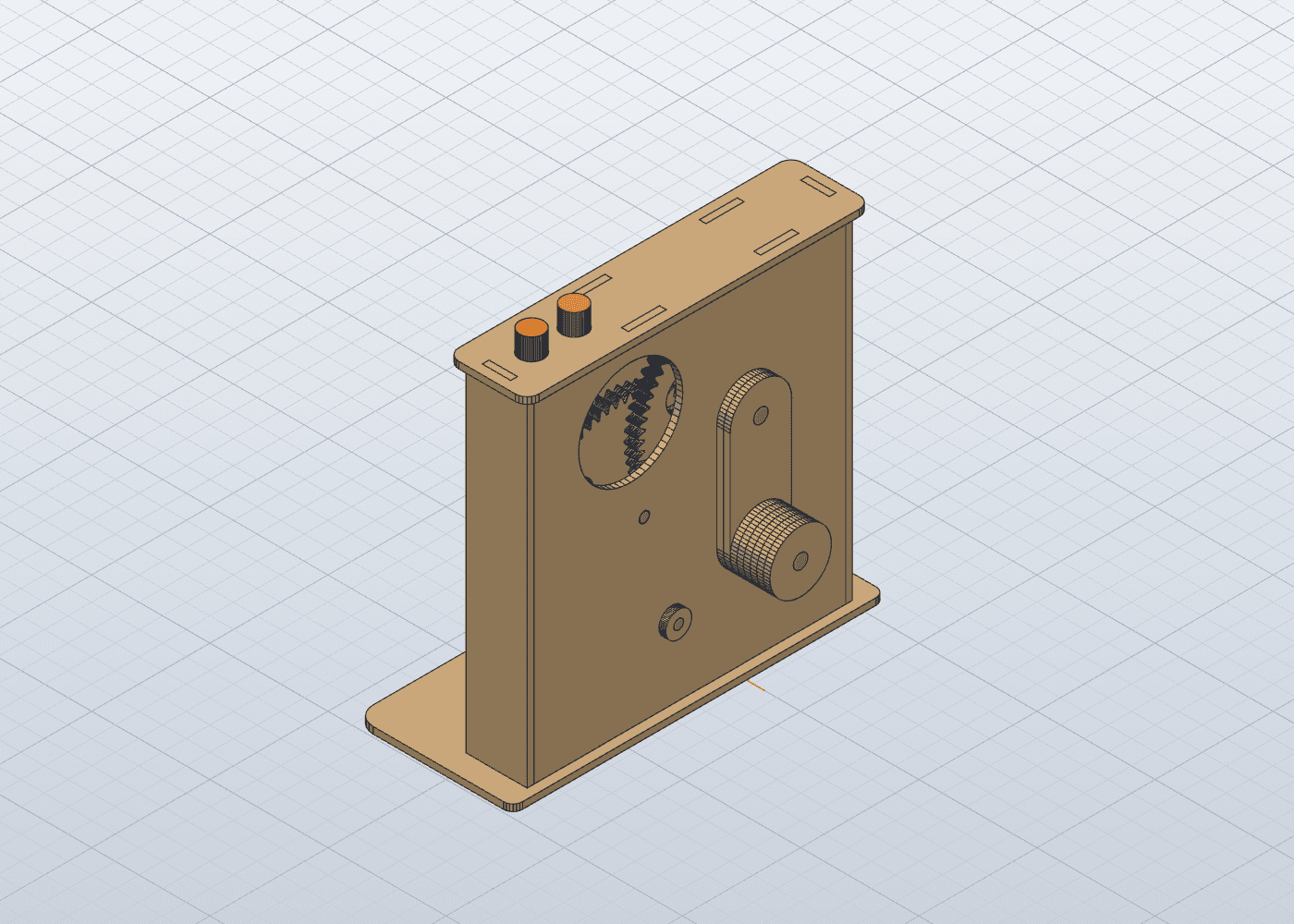
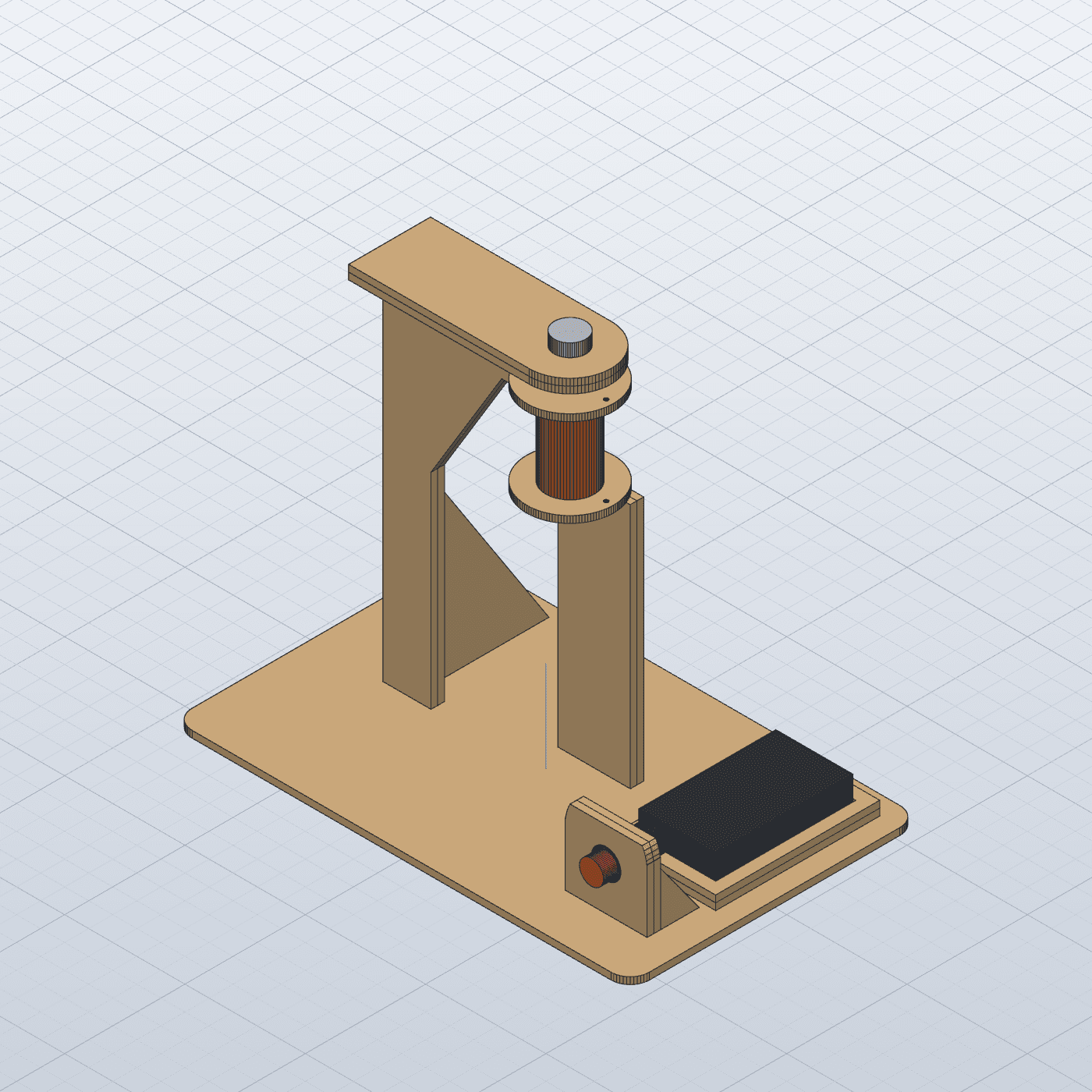
HydroArm: a Water-Powered Robot Arm with Syringes
A laser-cut robot arm that runs on water: push four syringes on a control panel and the arm turns, lifts, reaches and grabs. No batteries, motors, wires or screws. For Primary 1 to 6.
Project Overview
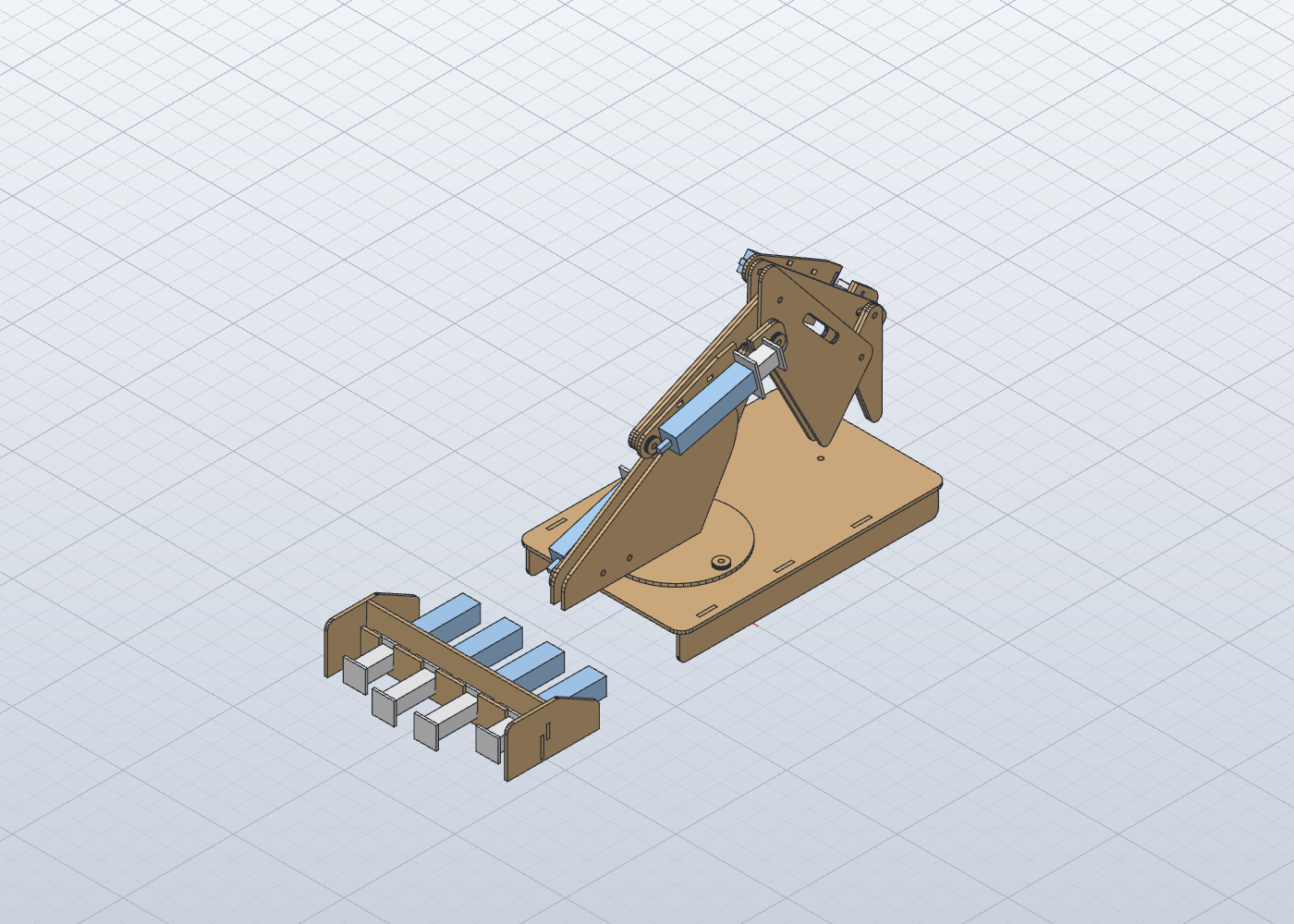
A robot arm that runs on water instead of electricity. Pupils push and pull four syringes on a control panel, and four matching syringes on the arm move the same way: the arm turns, lifts, reaches and grabs. The game is to pick a bottle cap up from the PICK circle and drop it on the DROP circle.
There are no batteries, motors, wires or screws. Each line is filled with a different food colour, so pupils can see which water moves which joint.
Designed and checked, not built yet
Every part, fit and motion in this kit was checked by script, but nobody has built one yet. Part sizes are typical values: measure yours and cut the fit test before the full sheets.
At a glance
| Specification | Value |
|---|---|
| Arm | Base 150 x 242 mm, shoulder 10 cm up, lifts a cap up to about 30 cm |
| Control panel | Separate, 166 x 83 x 42 mm, joined to the arm by four tubes |
| Motions | TURN 42 degrees each way, LIFT -12 to +70 degrees, REACH 124 degrees, GRAB 55 mm jaw |
| Wood | 41 parts on three 300 x 300 mm sheets |
| Syringes | 8 x 10 ml, all the same |
| Price | ₦30,000 per box (Build Box, see Subscribe) |
| Class | Primary 1 to 6 |
What it teaches
- Primary 4: liquids push and cannot be squashed: push here and it moves there. Read millilitres on the syringe scale.
- Primary 5: levers and pivots, measuring the turn with a protractor, and a fair test (caps moved in two minutes, three tries, average).
- Primary 6: pressure. Swap a panel syringe for 20 ml or 5 ml and feel the difference. Add an air bubble and feel the arm go spongy. Diggers, car brakes and the vulcanizer's jack work the same way.
Syringes without needles
Buy syringes without needles. If they come with needles, the teacher removes every needle before the class and puts it straight into a sharps box. No needle ever reaches a pupil.
Downloads
| File | Use |
|---|---|
| Fit test G-code | Cut this first (115 x 44 mm) |
| Sheet 1 G-code | Engrave, then cut |
| Sheet 2 G-code | Engrave, then cut |
| Sheet 3 G-code | Engrave, then cut |
| CAD files | STEP model, SVG and DXF sheets |
🛒 Materials Needed
- 3 sheets of 2.8 mm plywood, 300 x 300 mm
- 8 x 10 ml syringes, without needles
- 2 m of 4 mm inside-diameter tubing (aquarium air-line)
- 1-2 bamboo skewers (suya sticks)
- 15 small cable ties (100 mm)
- Food colouring in four colours
- Wood glue and candle wax
📋 Step-by-Step Instructions
Cut Fit test G-code first. Find which of the six holes (3.9 to 4.6 mm) grips your skewer and which lets it turn freely. Check that a syringe barrel slides through the round hole, its flange drops into the long slot, and its thumb pad drops into the hook part's slot. Syringe brands differ, so measure yours.
All 5 steps completed — great work!